


Read our 2024 annual report

Knowledge Hub


Global food and nutrition company Kerry Group has extended its partnership with Concern Worldwide through a four-year project to improve food security, nutrition and farm productivity in Kenya.
Continued partnership
Building on the success of the previous Kerry Group-funded RAIN (Realigning Agriculture to Improve Nutrition) projects in Zambia and Niger, Kerry Group has generously committed to extending its partnership with Concern through ALIVE, a four-year project to improve food security and nutrition in Kenya.
By removing barriers to progress, we aim to improve the lives of local farmers and their families. The focus on climate-smart solutions and health and nutrition support will create long-term value and support some of those most affected by hunger and malnutrition... We are extremely proud to partner with Concern once again to devise innovative solutions to help make Zero Hunger a reality.
When we partner with companies, the results are transformational for both the business and the communities we work with.

 Kerry & Concern Visit to Kenya's Tana River Region
ALIVE programme in Kenya
Kerry Group’s four-year programme in Kenya is transforming agricultural livelihoods by providing smallholder farmers with access to predictable markets, affordable finance, quality farming inputs and effective, climate smart technologies in Tana River County. This aligns with Kerry Group’s active commitment to the creation of sustainable nutrition solutions which are better for people, society and the planet.
This partnership is delivered through a shared value approach – incorporating important factors such as skills training, access to capital, markets, and employment for smallholder farming communities to thrive as well as improving nutrition and health levels that have been at the core of Concern and Kerry Group partnerships to date.

The challenge
Kenya is particularly vulnerable to climate shocks with many areas prone to drought or flood. This has led to regular and major food crises. The country ranks 143rd out of 193 countries in the Human Development Index, and 103 out of 136 countries in the Global Hunger Index. Kenya is predominantly rural, with 75% of the population living in rural areas, and agriculture is the backbone of the Kenyan economy.
Farmers in Kenya are particularly vulnerable to climate change. Pastoralism has been the main economic activity for households, but climate change has led to pasture deterioration and water scarcity, threatening household income and food security, and placing many farmers’ livelihoods at risk.

Improving food security
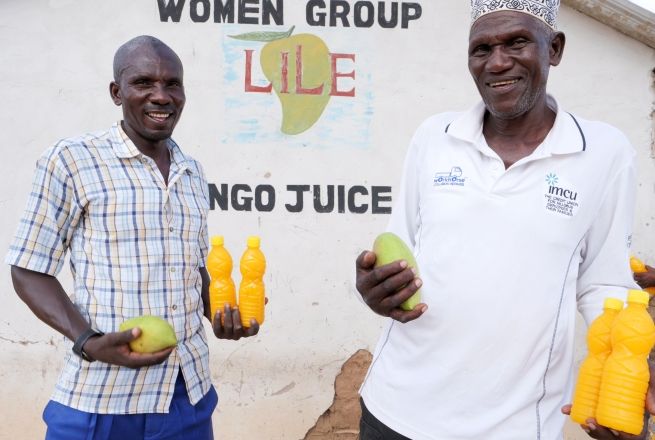
The ALIVE programme seeks to capitalise on the rich resource of the Tana River with a strong focus on improving nutrition and building mango production for consumption and sale. It will also address current barriers such as inadequate production methods, lack of organisation amongst farmers, and poor management of natural resources.
Its goals: to support farmers to upskill and to build more sustainable livelihoods; and improve the food and nutritional security of their local communities.
The programme is supporting the expansion of crop varieties under production, acreage of land in production and increased access to climate-smart agriculture training and inputs. A seed subsidy has given farmers a variety of high-quality drought tolerant seeds, which has enabled them to become more resilient to climate-induced shocks, resulting in increased output and better nutritional food access for participating households.
Positive impact

- 34,590 kilograms of climate resilient seeds distributed
- 6,669 farmers trained in climate-resilience, agronomics and pest management. To date, this has led to reduced post-harvest losses of mangoes by 18.24%
- 7,187 acres new areas for agricultural production opened up through agricultural mechanisation and water subsidy
- 2,769,114 kilograms of diversified food crops produced
- 3,012 early-maturing mango seedlings distributed to 3,685 farmers
- Mango value chain report produced and four micro processing industries for mangoes set up locally
- 21 cooperatives trained
Preventing malnutrition
The ALIVE programme is also making improvements in the malnutrition levels of children aged under five and pregnant and breastfeeding women across the three counties. It has achieved a reduction in acute malnutrition levels of children under five, from 14.3% to 13.7%. 22,673 mothers also completed training on nutrition education, malnutrition screening and self-referral, which has contributed to reductions in local malnutrition levels.
These improvements have been further strengthened by the training of 210 community health volunteers and 21 community health assistants to improve and maintain health across the area.


Our impact in 2024

people reached through our emergency response

people reached through our health interventions

people reached through our livelihoods programmes